


Human Sandbox: Ragdoll Play
4.6148.00 Reviews
App Specs
- Version
- 1.2.5
- Updated On
- License
- Free
- Downloads
- 5,000,000+
- Developer
- GrassBlock Studio
- Categories
- Simulation
- Platform
- Android
Screenshots
 Analysis by AppCompare
I approached Human Sandbox: Ragdoll Play expecting a quick physics toy rather than a conventional game with missions, progression, or a campaign. That expectation turned out to be important. This is a three-dimensional simulation playground from GrassBlock Studio where the enjoyment comes from arranging a scene, setting bodies and objects in motion, and watching the results unfold. It is free to download, aimed at a Teen audience, and supported by optional in-app purchases priced at $2.49 per item.
After spending time with it, my honest view is that the game works best when I treat it as a creative experiment. I do not open it looking for a carefully balanced challenge. I open it when I want to test a strange setup, create a little slapstick moment, or simply see how the ragdoll physics react to my choices. That makes it easy to pick up, but it also means the experience depends heavily on my willingness to invent scenarios instead of waiting for the game to provide a clear objective.
Getting comfortable with the sandbox
The first thing a new player should know is that “success” here does not mean completing a level in the usual sense. The meaningful reward is creating a scene that behaves in an interesting way. I found it more useful to think like a stage director: place the available elements, adjust the situation through touch, start the action, and observe what happens. If the result is dull, I reset mentally and try a different arrangement rather than assuming I have failed.
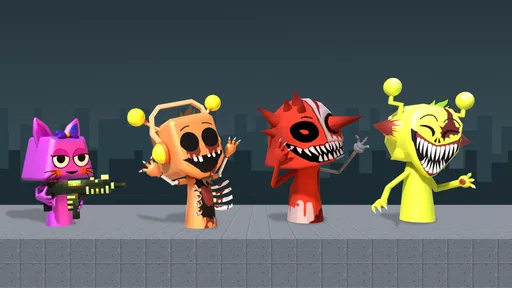
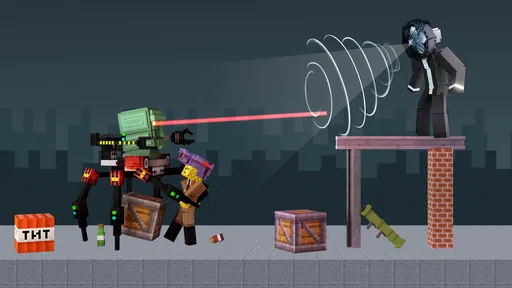
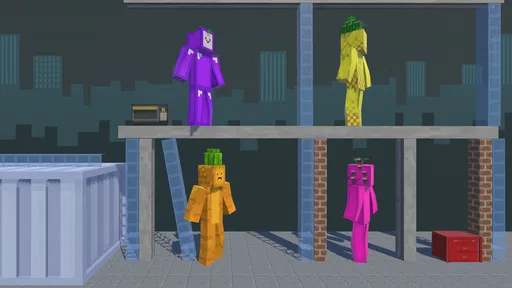
The presentation is built around a 3D ragdoll physics simulator, so movement and collisions are the main attraction. Bodies do not behave like ordinary game characters following a scripted animation. Their loose, reactive motion gives even a simple setup an unpredictable quality. A small change in placement can make a scene collapse differently, which is where much of the replay value comes from.
That freedom can feel refreshing compared with simulation games that surround every action with menus, objectives, and resource systems. It can also feel empty if you prefer a strong sense of direction. Players who want a city-building loop, a management career, or a story-driven sandbox should probably choose a different kind of simulation. This one is closer to an interactive toy box with a mischievous physics focus.
The game has attracted a substantial audience, with over five million installs and an average rating of 4.6 from around ten thousand ratings. Those figures suggest that the straightforward concept connects with many players, but they should not be read as a promise that everyone will enjoy the same style of play. The key question is whether you like experimenting without being told exactly what to do next.
What I noticed before trying anything complicated
My first useful adjustment was to slow down. It is tempting to tap rapidly and fill the scene immediately, but that makes it harder to understand why something happened. Starting with one subject and one interaction gives a clearer sense of the physics. Once I understood the basic rhythm, I could build more elaborate situations without losing track of the cause and effect.
Worth Reading Before You Choose

EA SPORTS FC Mobile 26 Is a Bigger Football Game, but It Takes Time

Flipboard Shows What News Apps Must Do Beyond the Feed

Switching to Android Auto Means Rethinking Your Driving Routine

Google Calendar Makes a Crowded Week Easier to Manage

Ludo King Makes the Most of the Minutes Between Plans

Baby Panda World Brings Quick Play to Modern Phones, but Its Game Library Feels Busy
This approach is especially helpful on a phone, where the screen can become visually busy quickly. I found that a smaller setup was not only easier to control but often funnier, because the important movement stayed visible. A crowded scene may look more dramatic, yet it can turn into visual noise when several bodies react at once.
Another practical point is that this is a game I would use in short sessions. I can spend a few minutes testing one idea, stop, and return later without needing to remember a complex storyline. That makes it a good fit for a break or for sharing a quick experiment with someone nearby. It is less suitable when I want a long, structured evening of steady advancement.
From installation to the first satisfying result
The app runs on Android 7.1 or later, and the current version is 1.2.5. Once it is installed, I recommend resisting the urge to judge it from the first few taps. The first meaningful goal is simply to create one clear interaction and watch it through. I placed the available elements with enough space to see the movement, started the scene, and treated the outcome as a test rather than a performance.
That mindset removes much of the early pressure. There is no need to discover a secret winning move. Instead, I look for a setup where the physical reaction is easy to read. If a body falls, bounces, or collides in an unexpected way, I ask what caused it and then change one part of the arrangement. Changing only one variable is a surprisingly useful habit because it turns random-looking behavior into something I can learn from.
For a first session, I would use this simple workflow:
Begin with a small number of elements so the scene remains readable.
Leave visible space around the main action instead of placing everything together.
Start the simulation and watch the complete reaction before resetting.
Change one position or interaction at a time to see what actually influenced the result.
Only add complexity after the basic setup produces a result you understand.
This is not a formal tutorial, but it gave me a more reliable path to the first enjoyable moment. The game becomes much more engaging once I stop tapping randomly and start making small experiments. The physics then feel less like a visual effect and more like a system I can play with.
A realistic everyday use case
Imagine having ten minutes while waiting for an appointment. I would not choose a game that requires a long match or careful progress through several menus. Human Sandbox: Ragdoll Play fits that pause because I can open it, try one compact arrangement, and close it after seeing the result. If the first attempt is amusing, I can make a second version; if it is not, I have lost very little time.
It also works as a casual shared activity. I can hand the phone to a friend and ask what kind of scene they would try, then compare our setups. The appeal is not competitive ranking but the conversation around cause and effect: why did one arrangement produce a more dramatic reaction, and what happens if the starting positions change? That makes it more social than its simple premise might suggest.
For younger players, the Teen content rating is worth taking seriously rather than treating it as a minor label. The game’s appeal is based on simulated bodies and physical mishaps, so parents should decide whether that style of cartoon-like experimentation suits the player. The rating does not automatically make the game inappropriate, but it does mean this is not something I would recommend blindly to every child.
Where new players can become confused
The biggest source of confusion is expecting a traditional objective. I initially caught myself looking for a clear indication that I had done something correctly. The better interpretation is that the scene itself is the result. If the setup creates an interesting chain of movement, that is the payoff. If nothing happens, I adjust the arrangement instead of searching for a hidden mission.
Another point of friction is the difference between visual drama and useful control. Adding more elements can make a scene appear busier, but it does not always make it more entertaining. When too much happens at once, I may not know which placement caused the main reaction. Keeping a clean starting layout is therefore more than an aesthetic choice; it helps me learn the game’s behavior.
I also would not assume that every surprising result is repeatable. Ragdoll physics are appealing partly because they can look loose and unpredictable. A setup that works once may not give me the exact same visual sequence when I recreate it. Players who need precise, repeatable outcomes may find that frustrating, while players who enjoy variation will see it as part of the charm.
Controls can require patience as well. Touchscreen sandbox interaction is naturally less precise than using a mouse or a larger display. I found it easier to make deliberate movements and pause between actions than to drag quickly. If an object lands somewhere unexpected, I treat that as a cue to simplify the scene and try again rather than fighting the interface.
How the optional purchases affect my view
The game is free, which makes it easy to try without committing money at the start. Optional purchases cost $2.49 per item. I would begin with the free experience and decide only afterward whether the extra content or convenience has enough value for my own play style. Because the core appeal comes from experimentation, paying does not automatically solve the main question of whether I enjoy open-ended physics play.
This is also where I would set a personal boundary. If I am satisfied making small scenes and testing basic interactions, I may never need to buy anything. If I become deeply invested in expanding the kinds of experiments I can create, an individual purchase may feel more reasonable. The important trade-off is to judge each item by how much it changes my actual play, not by the assumption that spending will turn the game into a structured progression experience.
Turning simple experiments into better play
Once the first successful action makes sense, I would move to controlled variations. For example, I might keep the same central setup and change the distance between elements, then compare how the reaction develops. This is more rewarding than rebuilding a completely different scene every time because it reveals the relationship between placement and movement. It also gives me a repeatable personal challenge without requiring an official score.
A second useful technique is to design around visibility. I try to keep the most important interaction near the center of the scene and avoid placing distracting elements where they hide the result. This matters particularly when several bodies are involved. The goal is not to make the scene look full; it is to make the key moment easy to follow.
A third technique is to create a beginning, middle, and end for the setup. Even without a story mode, I can arrange a cause, a collision, and a final resting position. Thinking in those stages helps prevent aimless clutter. It also gives me a reason to replay the scene: I can change the initiating action while keeping the ending area the same, or reverse the order and see whether the whole sequence behaves differently.
These small habits are the difference between tapping around for thirty seconds and getting a genuinely satisfying session. They are not hidden missions, but they are practical ways to extract more from the physics. In my experience, Human Sandbox: Ragdoll Play rewards curiosity more than speed.
Who should try it, and who should skip it
I would recommend it to players who enjoy physics toys, improvised scenes, and short bursts of experimentation. It is particularly appealing if you like watching systems react to your setup rather than following a fixed solution. People who enjoy sharing odd results with friends may also get more from it than someone playing entirely for progression.
I would skip it if I need a clear campaign, character development, competitive matchmaking, or a steady stream of unlocks to maintain interest. It is also not my first choice for someone who becomes frustrated when a simulation produces inconsistent-looking outcomes. The same looseness that makes one experiment surprising can make another feel messy.
Compared with a typical construction or management simulator, this game gives me less responsibility over a growing world and more immediate interaction with physical reactions. Compared with a puzzle game, it offers fewer fixed answers and more room to define my own test. Compared with a conventional action game, it is slower and more observational. Those differences are not weaknesses by themselves, but they make the choice quite specific: this is for playful manipulation, not for a traditional win state.
My final recommendation after repeated sessions
Human Sandbox: Ragdoll Play succeeds when I approach it as a compact laboratory for absurd physical scenes. The free entry point, simple premise, and short-session format make it easy to recommend as a casual download, while the 3D presentation gives small experiments enough visual energy to stay interesting. GrassBlock Studio has focused the experience on the part that matters most here: setting up a situation and seeing how the ragdolls respond.
Its limits are equally clear. The open-ended design can leave first-time players wondering what they are supposed to accomplish, and touchscreen placement is not always as exact as I would like. The physics can also be unpredictable in ways that are entertaining one moment and untidy the next. I would not choose it as a replacement for a goal-driven simulation or a deep sandbox with long-term management.
For a first session, my advice is simple: start small, watch one complete reaction, change only one thing, and let the experiment teach you how to play. If that process feels enjoyable, the game has plenty of room for personal ideas. If you need explicit objectives from the beginning, it is better to know that before investing time or making an in-app purchase. The real strength is the freedom to turn a few taps into an unexpected physical scene, and that is enough to make this a worthwhile free simulation for the right kind of player.
Pros
- Simple controls make it easy to experiment with objects and ragdolls.
- Open-ended physics encourage creative and unpredictable gameplay.
- Works well for short play sessions when you want casual entertainment.
- Multiple tools and objects provide variety beyond basic ragdoll movement.
- Sandbox format lets players create their own scenarios without strict goals.
Cons
- Physics can occasionally behave inconsistently or produce awkward animations.
- The lack of structured objectives may feel repetitive over time.
- Some content or features may require ads
- purchases
- or extra unlocks.
- Busy scenes can cause performance issues on older phones and tablets.
- The game may be unsuitable for younger players due to cartoon violence.
FAQs for Human Sandbox: Ragdoll Play
What is Human Sandbox: Ragdoll Play?
Human Sandbox: Ragdoll Play is a physics-based sandbox game focused on experimenting with ragdoll characters, objects, tools, and environmental effects. Instead of following a traditional story or completing fixed missions, you create your own scenarios and observe how the characters react. The appeal comes from its open-ended gameplay, simple controls, and the freedom to test different combinations in a playful simulation environment.
How do you play Human Sandbox: Ragdoll Play?
Gameplay generally involves selecting a ragdoll, placing it in a scene, and adding items or interactive elements around it. You can move objects, trigger reactions, and experiment with the game’s physics to create your own situations. The experience is designed to be easy to understand, although discovering how different tools interact may take some trial and error. Most of the enjoyment comes from experimenting rather than pursuing a specific objective.
Is Human Sandbox: Ragdoll Play suitable for children?
Parents should review the game carefully before allowing younger children to play. Although the presentation may look simple and cartoon-like, the sandbox concept can include ragdoll impacts, accidents, and simulated damage depending on the available tools and scenarios. It does not necessarily provide conventional educational gameplay, so parental guidance is recommended, particularly for children who may be sensitive to physics-based violence or disturbing interactions.
Does Human Sandbox: Ragdoll Play require an internet connection?
The core sandbox experience may be playable without a continuous internet connection, which is convenient for offline entertainment. However, certain features can depend on the version installed, including advertisements, optional purchases, updates, cloud-related services, or additional content. For the most reliable experience, it is best to launch the game once while connected, check which features are available offline, and confirm the requirements listed on your device’s app store page.
Is Human Sandbox: Ragdoll Play free to download?
Human Sandbox: Ragdoll Play may be available as a free download, but users should check the current store listing because pricing and monetization can change between updates or platforms. Free versions may include advertisements, optional purchases, or restrictions on some items and features. Before downloading, review the in-app purchase information, permissions, age rating, and recent user reviews to understand what the complete experience may involve.


